Pour-Over Technique for an Expressive Coffee
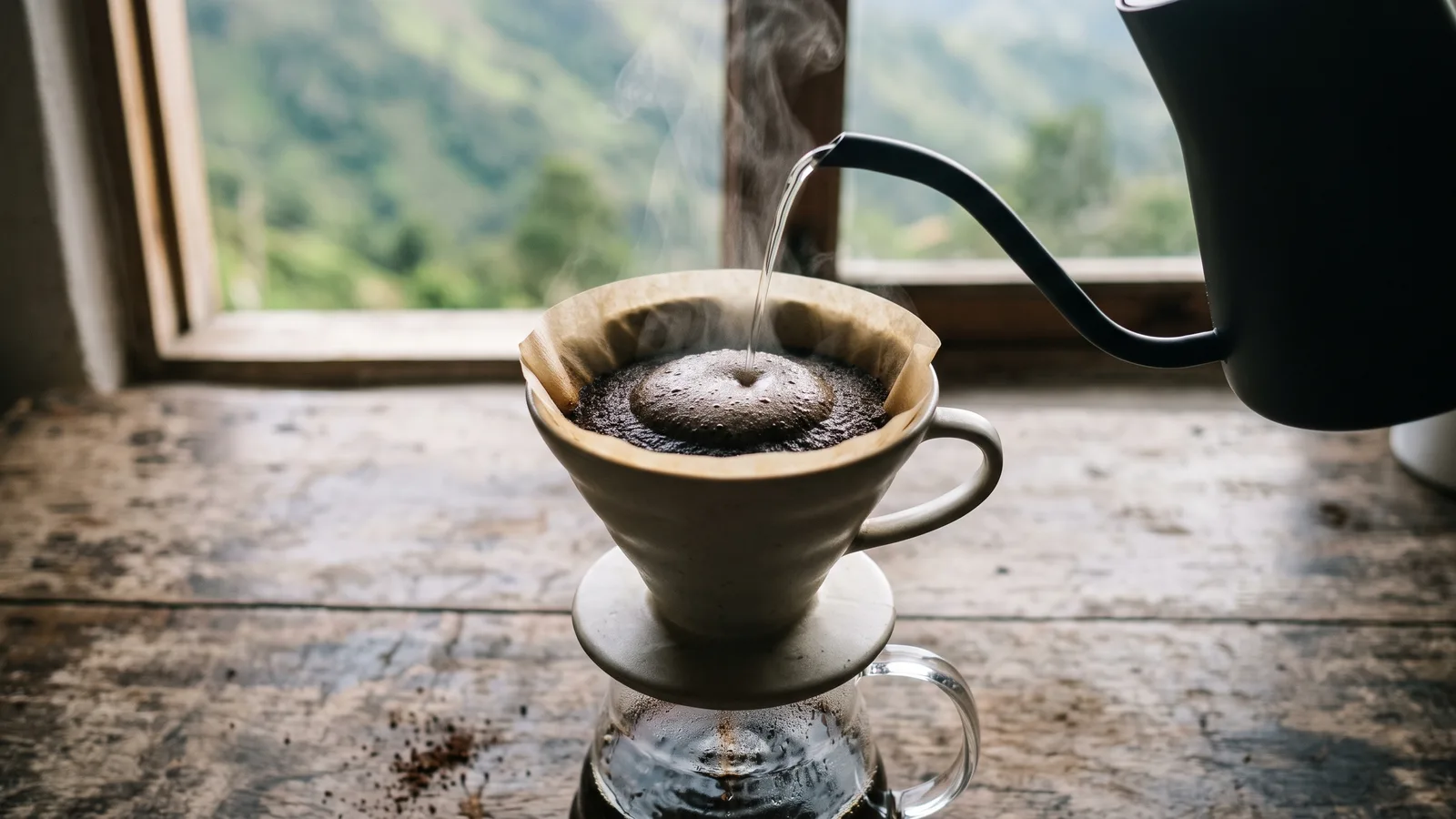
A pour-over rewards attention more than any other method, because you control the water from the first drop to the last. Three moments decide the cup: the bloom, the pace of the pour and the drawdown. Get those right and an expressive coffee, like our Caldas Geisha Harmony or Nariño Sweet Symphony, tastes as clear as it can.
Our recipe uses a Chemex or a V60, a medium grind and a 32-gram dose for 400 milliliters of water, brought almost to the boil: about 96 degrees Celsius (205 degrees Fahrenheit). The full steps are in our brewing guide. This post is about what happens between them.
The bloom
Freshly roasted coffee holds carbon dioxide. When hot water first reaches the grounds, that gas rushes out, and the bed swells and bubbles. Until it settles, the gas pushes water away from the coffee, so the extraction that follows would be uneven. That is why the recipe starts with a small pour, 64 milliliters, about twice the weight of the coffee, and a 50-second wait.
Pour the bloom water in a slow spiral from the center outward, so every ground is wet and none is left dry at the edges. A vigorous bloom, a domed bed with fine bubbles, is a sign of fresh coffee. A flat, quiet one usually means the beans have been open for a while.
The pour
After the bloom, add the rest of the water in several slow pours rather than all at once. Keep the stream thin and steady, and aim at the center of the bed, drawing small circles that stay clear of the paper. Water poured down the side of the filter runs past the coffee instead of through it.
A gooseneck kettle makes this far easier, because its narrow spout gives you a stream you can place. Keep the water level roughly the same through each pour, so the bed stays submerged at an even depth and the coffee extracts evenly.
The drawdown
When the last of the water is in, the bed drains, and the time this takes tells you how the grind is working. In our recipe, the bed should be dry roughly two minutes after you stop pouring. If it runs through much faster, the grind is too coarse, and the cup will taste thin or sour. If it stalls well past that, the grind is too fine, and the cup will turn bitter or dry. Adjust the grind in small steps and leave everything else as it is.
A flat, even bed at the end is a good sign. A bed with a crater or with grounds stuck high on the paper means the water found an easy path, and the next pour should be gentler and more central.
Chemex or V60
Both use paper and both suit our recipe, but they behave differently. The Chemex filter is thick, which slows the flow and holds back even more of the oils, so the cup is especially clean and light. The V60's thinner filter and spiral ridges let water run faster, so it reacts more to your pouring and to the grind. If your V60 drains too quickly, grind a little finer than you would for the Chemex.
Why these two coffees
A pour-over shows what is already in the cup, which is why we keep it for our most expressive coffees. In Caldas Geisha Harmony, it lets the chamomile and the juicy citrus stand apart. In Nariño Sweet Symphony, it brings the deep sweetness and the chocolatey undertones through without heaviness. Both are washed coffees, and both are best tasted black.
For where each one grows, see Caldas and Nariño. And give the first cup a minute to cool: as the temperature falls, more of the coffee's character comes forward.